
Orcs have come a long way from their early appearances in fantasy fiction. Once portrayed almost exclusively as savage warriors and enemy soldiers, they have evolved into one of the genre’s most diverse and fascinating races. Modern fantasy authors have reimagined orcs in countless ways, creating unique cultures, political systems, religions, and social structures that challenge traditional stereotypes.
Today, there is no single definition of what an orc should be. Depending on the author, orcs can be noble warriors, oppressed peoples, tribal nomads, cunning strategists, revolutionary leaders, or even scholars and diplomats.
For readers who enjoy fantasy worlds filled with complex non-human cultures, exploring the different types of orcs can be one of the most rewarding aspects of the genre.
The Traditional Warrior Orc
The most recognizable version of the orc remains the warrior archetype.
These orcs are typically known for their physical strength, martial skill, and fierce loyalty to their clans or tribes. They often live in harsh environments where survival depends on courage, discipline, and combat prowess.
While early fantasy sometimes reduced warrior orcs to simple villains, modern authors frequently add greater depth to these societies. Honor codes, family bonds, and cultural traditions often play an important role in shaping these characters.
The warrior orc remains popular because it embodies many of the qualities fantasy readers enjoy, including bravery, resilience, and determination.
Tribal Orcs
Many fantasy worlds portray orcs as members of decentralized tribal societies.
These groups are often organized around clans, family lineages, or local chieftains rather than centralized governments. Tribal orcs frequently maintain strong connections to their ancestors, spiritual beliefs, and traditional ways of life.
In these stories, tribal culture becomes an important source of identity. Conflicts may arise when outside forces attempt to conquer, assimilate, or disrupt these traditions.
This type of orc often appears in stories focused on survival, heritage, and resistance against larger empires.
Nomadic Orcs
Not all orcs live in permanent settlements.
Some fantasy worlds feature nomadic orc cultures that travel across deserts, grasslands, mountains, or wilderness regions. These societies often develop unique customs shaped by mobility and adaptation.
Nomadic orcs are frequently portrayed as skilled hunters, scouts, traders, or riders. Their knowledge of the land often gives them advantages that more settled civilizations lack.
Readers who enjoy stories centered on exploration and cultural identity often find nomadic orc societies particularly fascinating.
Shamanistic Orcs
Magic plays an important role in many fantasy settings, and some of the most interesting orc cultures revolve around spiritual traditions.
Shamanistic orcs often maintain close relationships with nature, ancestral spirits, or ancient gods. Their leaders may serve as both religious figures and political advisors, helping guide their communities through difficult times.
These stories frequently explore themes of faith, tradition, and the tension between ancient beliefs and changing circumstances.
The presence of shamans and spiritual leaders also helps distinguish these orc cultures from the purely militaristic portrayals common in older fantasy literature.
Oppressed Orcs
One of the most significant developments in modern fantasy has been the rise of stories that portray orcs as victims of conquest, discrimination, or systemic oppression.
Rather than serving as antagonists, these orcs occupy the role traditionally assigned to marginalized groups. Their stories focus on survival, cultural preservation, and the struggle for freedom.
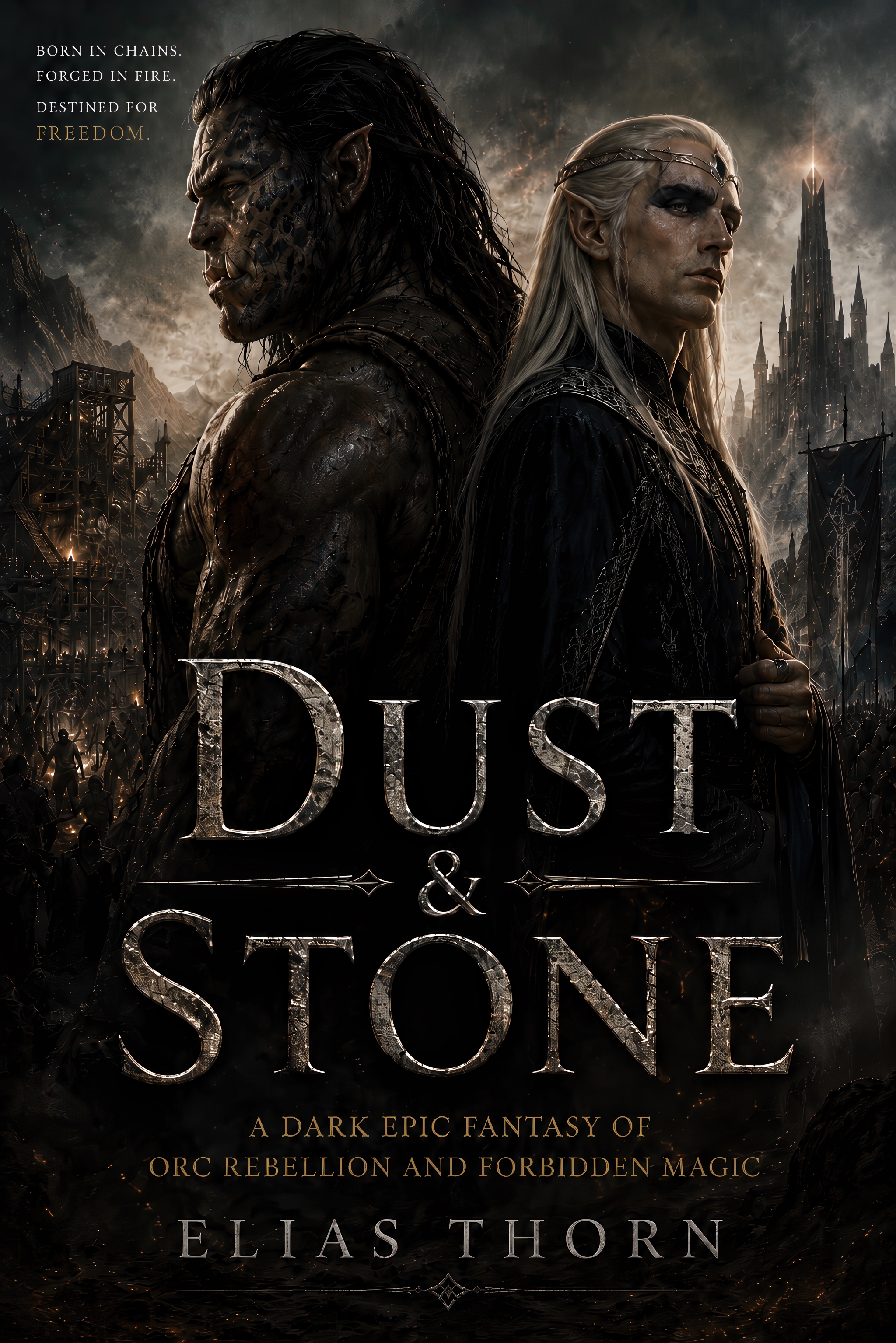
A powerful example can be found in Dust & Stone. The Kethri, a proud race of orcs, have spent fifty years enslaved beneath the mountains by the elven Dominion. Their language has been outlawed, their traditions suppressed, and their history rewritten.
Through the story of Vorrick and the growing rebellion among the Kethri, the novel explores what happens when a people fight to reclaim not only their freedom but also their identity.
This type of orc-centered narrative has become increasingly popular because it allows fantasy authors to examine themes of colonization, resistance, and cultural survival.
👉 Learn more about Dust & Stone: https://a.co/d/0hGuId6e
Noble Orcs
Some fantasy authors deliberately challenge traditional assumptions by portraying orcs as one of the most honorable races in their worlds.
These characters often place great value on loyalty, integrity, and personal responsibility. Their societies may be built around strict codes of conduct that govern everything from warfare to diplomacy.
In many cases, noble orcs serve as a contrast to supposedly civilized societies that are plagued by corruption, greed, or political manipulation.
These stories remind readers that appearances can be deceptive and that morality is rarely determined by race.
Political Orcs
As fantasy worldbuilding has become more sophisticated, authors have increasingly explored the political dimensions of orc societies.
Political orcs may serve as rulers, diplomats, military commanders, or revolutionary leaders. Their stories often focus on governance, alliances, succession struggles, and negotiations between competing factions.
Rather than relying solely on battlefield conflicts, these narratives examine how power operates within and between societies.
Readers who enjoy political fantasy often appreciate seeing orcs occupy positions of leadership and influence.
Orc Antiheroes
Not every orc protagonist fits the mold of a traditional hero.
Many modern fantasy novels feature orc antiheroes who occupy morally gray territory. These characters may pursue revenge, personal ambition, or questionable goals while still remaining sympathetic to readers.
The popularity of grimdark fantasy has contributed significantly to the rise of this archetype. Readers increasingly enjoy characters who make difficult decisions and struggle with the consequences of their actions.
Orc antiheroes often feel especially compelling because they must navigate both external challenges and internal conflicts.
Scholarly and Intellectual Orcs
Perhaps the most surprising development in modern fantasy is the emergence of intellectual orc characters.
Rather than relying on physical strength alone, these orcs serve as historians, inventors, strategists, mages, and philosophers. Their stories challenge long-standing stereotypes and demonstrate the versatility of the race as a storytelling tool.
By presenting orcs as thinkers as well as warriors, authors create richer and more believable fantasy worlds.
These portrayals also help expand the range of stories that can be told within the subgenre.
Why Orc Diversity Matters
The growing variety of orc portrayals reflects a larger trend within fantasy literature. Readers increasingly seek stories that move beyond simple archetypes and embrace complexity.
When authors create different types of orcs, they transform an entire race from a stereotype into a collection of unique cultures and individuals. This approach leads to stronger worldbuilding, more engaging characters, and more meaningful storytelling.
It also allows fantasy to explore a wider range of themes, including identity, prejudice, belonging, leadership, and freedom.
Final Thoughts
The idea of a single “orc type” no longer exists in modern fantasy. Today’s authors have reimagined orcs in countless ways, creating warriors, scholars, rebels, leaders, shamans, and heroes who challenge traditional assumptions about what fantasy races can be.
Whether they are fighting for survival, defending ancient traditions, leading political movements, or reclaiming stolen identities, modern orcs have become some of the genre’s most compelling characters.
Books like Dust & Stone demonstrate how powerful these stories can be when orcs are treated as fully realized people rather than simple monsters. The Kethri’s struggle for freedom and cultural survival serves as a perfect example of how far orc fantasy has evolved and why readers continue to embrace it.
👉 Discover Dust & Stone on Amazon: https://a.co/d/0hGuId6e
Frequently Asked Questions
What are the different types of orcs in fantasy?
Common types include warrior orcs, tribal orcs, nomadic orcs, shamanistic orcs, oppressed orcs, noble orcs, political orcs, antiheroes, and intellectual orcs.
Are all fantasy orcs violent warriors?
No. Modern fantasy often portrays orcs as scholars, leaders, diplomats, rebels, and heroes in addition to warriors.
What book features oppressed orcs?
Dust & Stone centers on the Kethri, an enslaved orc civilization struggling to reclaim its freedom and identity.
Why have orc portrayals changed in modern fantasy?
Readers increasingly enjoy complex characters and cultures, leading authors to move beyond simplistic monster archetypes.
Are orcs becoming more popular in fantasy literature?
Yes. Orc-centered stories continue to grow in popularity as authors explore new perspectives and deeper themes.
Leave a Reply