
For much of fantasy history, orcs occupied a familiar role. They were the enemies at the gates, the warriors in the opposing army, and the creatures heroes were expected to defeat. Rarely were they given center stage, and even more rarely were readers encouraged to see the world through their eyes.
That has changed dramatically over the last two decades.
Today, orc fantasy has become one of the fastest-growing niches within the fantasy genre. Authors are increasingly creating stories that place orcs at the heart of the narrative, exploring their cultures, histories, struggles, and ambitions in ways that were once almost unheard of.
The rise of orc fantasy reflects a larger evolution in modern storytelling. Readers want more than simple heroes and villains. They want complex characters, unique perspectives, and worlds that feel rich and believable.
Orc-centered fantasy delivers exactly that.
Orcs Were Once Defined by Stereotypes
Traditional fantasy often portrayed orcs as a single, monolithic race.
They were usually depicted as brutal warriors driven by violence and conquest. Their societies received little development, and individual orcs were rarely given personalities beyond their role as antagonists.
This approach worked in stories that relied on clear distinctions between good and evil, but it left little room for nuance.
As fantasy matured, readers began asking questions.
What was life like in an orc settlement?
What traditions did they follow?
How did they view the world?
What stories would emerge if they became the heroes rather than the villains?
These questions opened the door to a new generation of fantasy storytelling.
Readers Wanted New Perspectives
One of the biggest reasons for the rise of orc fantasy is that readers increasingly seek fresh perspectives.
Fantasy spent decades focusing primarily on human protagonists and a relatively small collection of familiar archetypes. While those stories remain popular, many readers now enjoy exploring cultures and viewpoints that feel different from what they have seen before.
Orcs provide a perfect opportunity for this.
Because they were historically portrayed as outsiders, authors can use them to explore themes that resonate strongly with modern audiences, including identity, prejudice, cultural survival, freedom, and belonging.
The result is fantasy that feels both familiar and refreshingly new.
Modern Orcs Are Fully Realized Characters
Perhaps the most important change in recent years has been the way authors approach orc characterization.
Modern orcs are no longer defined solely by physical strength.
They are:
- Leaders
- Parents
- Scholars
- Rebels
- Diplomats
- Survivors
- Revolutionaries
Like any well-written character, they possess flaws, ambitions, fears, and dreams.
This evolution has made them significantly more relatable and has helped transform orc-centered stories into some of the genre’s most emotionally engaging narratives.
The Influence of Dark Fantasy
Dark fantasy has played a major role in the growth of orc fantasy.
Readers who enjoy morally complex stories often appreciate protagonists who exist outside traditional heroic archetypes. Orc characters fit naturally within these narratives because they frequently occupy positions on the margins of society.
Their stories often involve difficult choices, impossible circumstances, and hard-earned victories.
These elements align perfectly with the themes that have made dark fantasy increasingly popular.
As grimdark and darker fantasy subgenres expanded, so did opportunities for orc protagonists to take center stage.
Dust & Stone and the Modern Orc Narrative
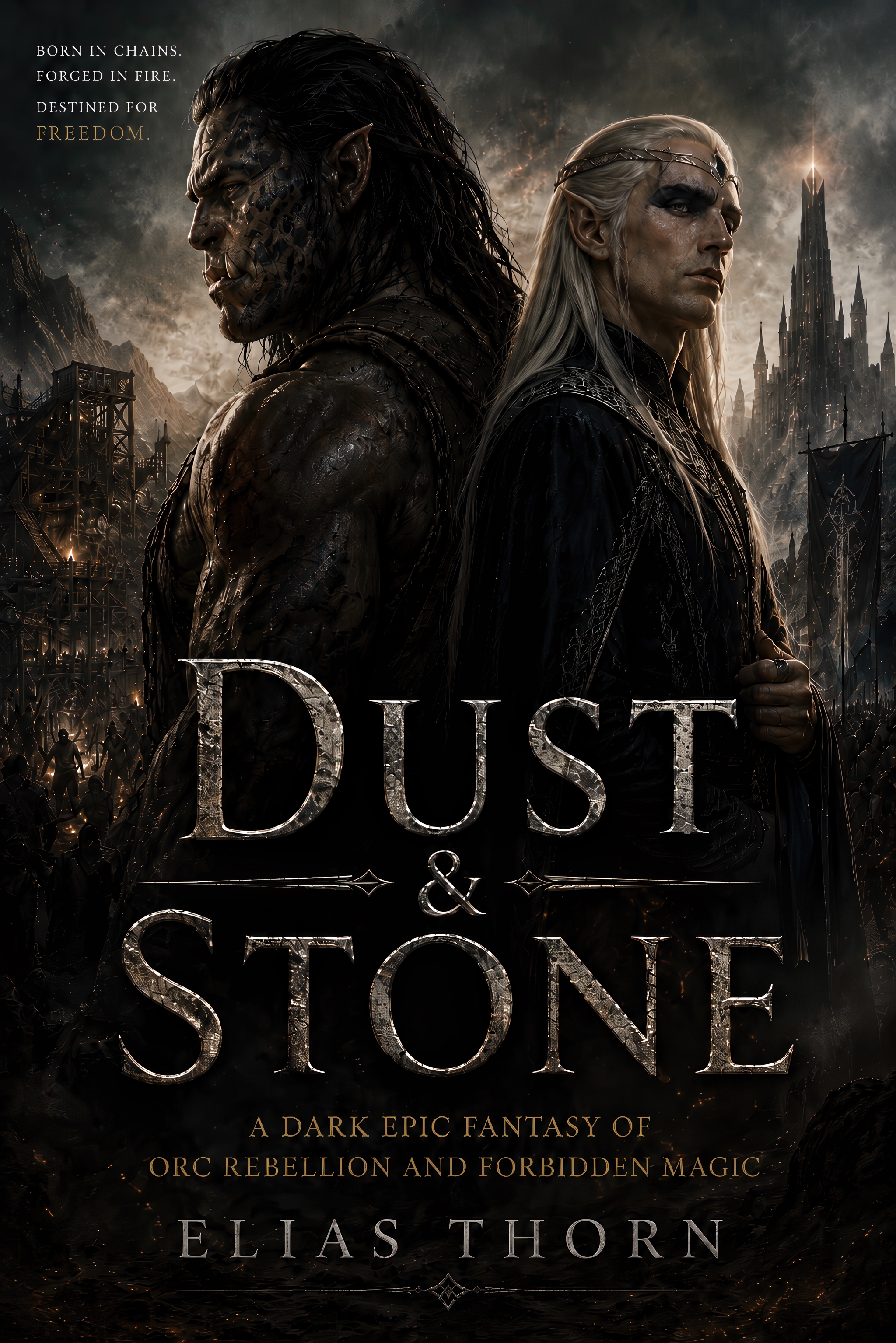
A strong example of modern orc fantasy can be found in Dust & Stone.
The novel follows the Kethri, a proud race of orcs who have spent fifty years enslaved beneath the mountains by the elven Dominion. Their language has been outlawed, their traditions suppressed, and their identity systematically erased.
At the center of the story is Vorrick, an ordinary laborer whose life changes after a personal tragedy forces him to question everything he has accepted about the world around him.
Rather than presenting orcs as villains, the novel portrays them as a people fighting for survival, freedom, and cultural preservation.
This perspective reflects many of the qualities that define modern orc fantasy. The story explores oppression, memory, rebellion, and sacrifice while allowing readers to experience these themes through the eyes of characters who were once confined to the role of monsters.
👉 Learn more about Dust & Stone: https://a.co/d/0hGuId6e
Why Orc Fantasy Resonates Today
Several factors help explain why readers continue embracing orc-centered stories.
Underdog Narratives
Many orc protagonists begin their journeys at a disadvantage, making them easy to root for.
Rich Themes
Stories frequently explore identity, belonging, cultural survival, and freedom.
Fresh Worldbuilding
Orc societies often provide opportunities for authors to create unique cultures and traditions.
Emotional Depth
Modern orc fantasy focuses heavily on character development and meaningful personal struggles.
Moral Complexity
Readers enjoy stories that move beyond simplistic good-versus-evil conflicts.
Together, these qualities create narratives that feel both entertaining and substantial.
Orc Fantasy Is Expanding
As the subgenre grows, authors are exploring an increasingly diverse range of stories.
Some focus on warfare and rebellion.
Others emphasize politics, diplomacy, exploration, family dynamics, or cultural preservation.
This variety demonstrates how flexible orc-centered storytelling has become.
The race is no longer confined to a single role or stereotype. Orc characters can now support virtually any type of fantasy narrative.
This versatility is one of the reasons the subgenre continues attracting new readers.
The Future of Orc Fantasy
The future looks bright for orc fantasy.
As readers continue seeking unique perspectives and emotionally rich stories, orc protagonists are likely to become even more common. New authors are already experimenting with different interpretations of orc culture, history, and identity, expanding the possibilities of what these stories can achieve.
Future novels may explore areas that have received relatively little attention, including trade, diplomacy, religion, exploration, and family life.
The potential remains enormous.
Final Thoughts
The rise of orc fantasy represents one of the most exciting developments in modern fantasy literature. What began as a race largely confined to villainous roles has evolved into a source of some of the genre’s most compelling protagonists and narratives.
Today’s orc-centered stories explore identity, resilience, freedom, and cultural survival while challenging readers to reconsider long-held assumptions.
Books like Dust & Stone showcase the best of this evolution. Through Vorrick’s journey and the Kethri’s struggle for liberation, the novel demonstrates how powerful fantasy can become when it embraces perspectives that were once overlooked.
For readers looking to explore one of fantasy’s fastest-growing subgenres, there has never been a better time to discover orc fantasy.
👉 Get your copy of Dust & Stone: https://a.co/d/0hGuId6e
Frequently Asked Questions
What is orc fantasy?
Orc fantasy refers to fantasy stories that focus on orc characters, cultures, and perspectives rather than treating orcs solely as villains.
Why is orc fantasy becoming more popular?
Readers increasingly enjoy complex characters, unique perspectives, and stories that challenge traditional fantasy stereotypes.
Is Dust & Stone an orc fantasy novel?
Yes. The novel follows the Kethri, an oppressed orc civilization fighting to reclaim its freedom and identity.
What themes are common in orc fantasy?
Identity, freedom, cultural survival, prejudice, rebellion, leadership, and belonging are among the most common themes.
What are some popular orc fantasy books?
Popular examples include Dust & Stone, The Grey Bastards, Orcs by Stan Nicholls, and various Warcraft novels.
Leave a Reply