
For generations, orcs occupied a familiar place in fantasy literature. They were the enemies at the gates, the armies marching beneath dark banners, and the creatures heroes were expected to defeat. While these portrayals became deeply ingrained in fantasy culture, they rarely allowed orcs to exist as anything more than obstacles.
Modern fantasy has changed that.
Today, some of the genre’s most compelling stories place orcs at the center of the narrative, transforming them from villains into heroes, leaders, survivors, and revolutionaries. This evolution has opened the door to richer storytelling and given readers a fresh perspective on one of fantasy’s most iconic races.
As fantasy continues to evolve, orcs are increasingly becoming some of its most fascinating protagonists.
The Traditional Orc Stereotype
Classic fantasy often relied on clear distinctions between good and evil. Heroes were noble, villains were monstrous, and readers rarely questioned those roles.
Orcs typically fell into the latter category.
They were frequently depicted as savage warriors driven by destruction and violence. Their cultures were rarely explored, and their motivations were often reduced to serving a dark lord or invading civilized lands.
While these portrayals helped establish some of fantasy’s most recognizable imagery, they also limited the storytelling possibilities available to authors.
After all, every race has a history. Every culture has a perspective. Every conflict has more than one side.
Modern fantasy writers have increasingly embraced these ideas.
Why Readers Connect with Orc Heroes
One reason orc protagonists resonate so strongly with readers is that they often begin as outsiders.
Unlike traditional fantasy heroes who may inherit kingdoms or fulfill ancient prophecies, orc characters frequently start from positions of disadvantage. They face prejudice, oppression, misunderstanding, or outright persecution.
This creates immediate emotional investment.
Readers naturally root for characters who must overcome difficult circumstances to achieve their goals. When an orc protagonist fights not only external enemies but also the assumptions others make about them, the story gains an additional layer of depth.
The result is a hero whose victories feel earned and whose struggles feel meaningful.
Orc Heroes Challenge Fantasy Expectations
Fantasy thrives when it surprises readers.
Turning orcs into heroes challenges decades of assumptions about who gets to be the protagonist in fantasy stories. It encourages readers to question traditional narratives and consider events from perspectives that were previously ignored.
This shift has allowed authors to explore themes that might not feel as impactful in more conventional fantasy settings.
Stories centered on orc heroes often examine:
- Identity
- Cultural survival
- Oppression
- Freedom
- Family loyalty
- Leadership
- Resistance
These themes give modern orc fantasy a level of emotional complexity that resonates with contemporary audiences.
The Rise of the Orc Antihero
Not every orc protagonist fits the mold of a traditional hero.
Many of the most memorable characters in modern fantasy occupy morally gray territory. They make difficult decisions, carry deep flaws, and sometimes pursue goals that blur the line between justice and revenge.
This complexity makes them compelling.
Readers do not necessarily need heroes to be perfect. In many cases, they prefer characters who struggle with uncertainty and face impossible choices.
The rise of grimdark and dark fantasy has further accelerated this trend, creating space for orc protagonists who are every bit as layered and conflicted as their human counterparts.
Dust & Stone and the New Orc Hero
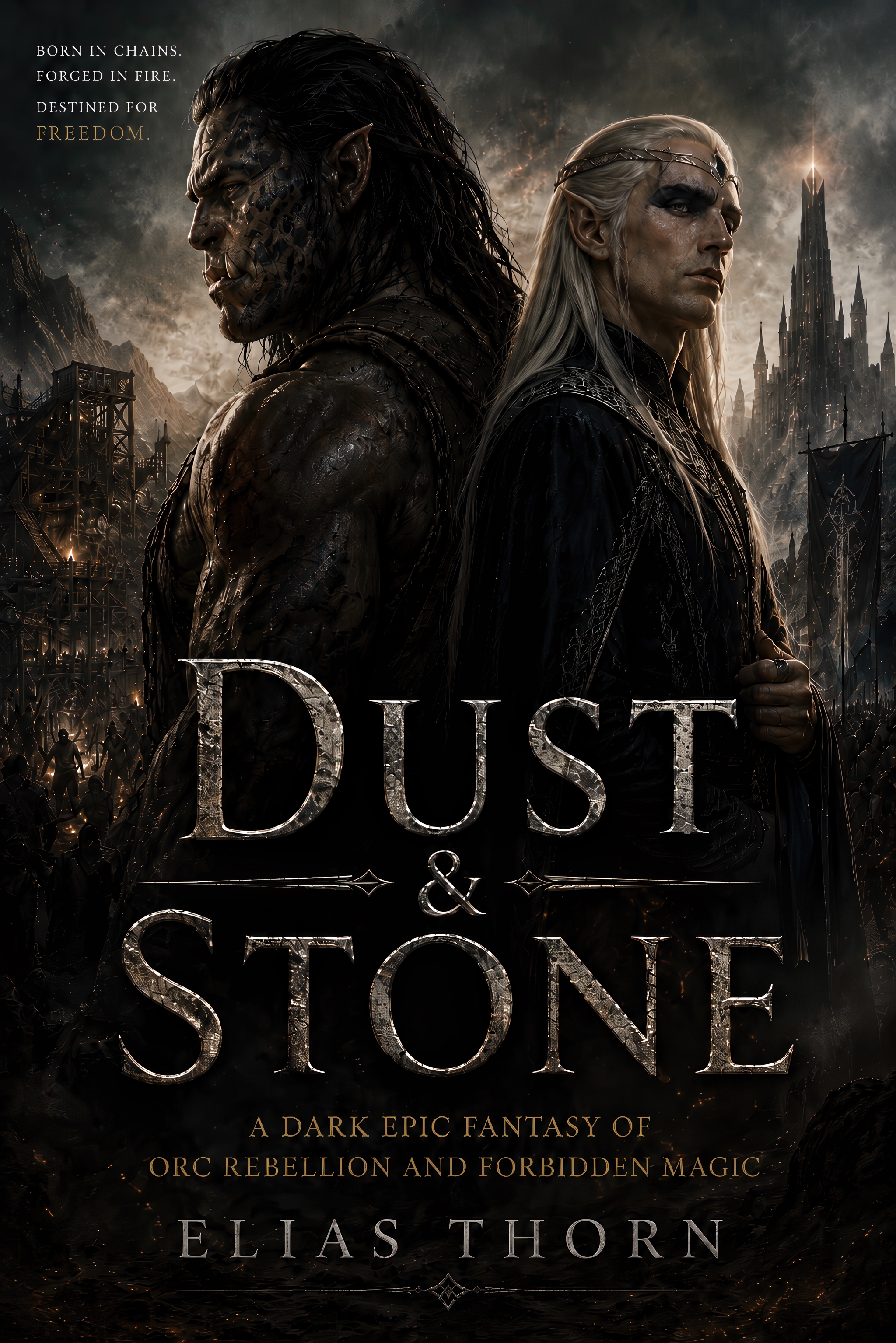
One of the strongest examples of the modern orc hero can be found in Dust & Stone.
Rather than portraying orcs as villains, the novel introduces readers to the Kethri, a proud people who have spent fifty years living beneath the mountains as slaves of the elven Dominion. Their language has been outlawed, their gods forgotten, and their culture systematically erased.
At the center of the story is Vorrick, an ordinary laborer whose life changes after the execution of his father. As he uncovers ancient secrets and becomes connected to a growing rebellion, he is forced to confront difficult questions about freedom, sacrifice, and leadership.
What makes Vorrick compelling is that he is not a flawless hero. He is driven by grief, anger, and uncertainty. His journey feels deeply human despite belonging to a race often portrayed as monstrous.
In many ways, Dust & Stone represents the evolution of orc fantasy itself. The story asks readers to see the world through the eyes of those who have been conquered rather than those who conquered them.
👉 Learn more about Dust & Stone: https://a.co/d/0hGuId6e
Orc Heroes Often Represent Resilience
Many modern orc protagonists embody resilience in ways that resonate strongly with readers.
Whether they are fighting to preserve their culture, protect their families, or reclaim stolen freedoms, they frequently face challenges that seem impossible to overcome.
This creates narratives filled with determination and perseverance.
The most memorable orc heroes are not necessarily the strongest warriors. Instead, they are characters who continue moving forward despite overwhelming odds.
Their strength comes not only from physical power but from their willingness to endure hardship and continue fighting for something greater than themselves.
The Importance of Orc Culture in Modern Fantasy
Another reason orc heroes have become more compelling is the increasing attention authors give to worldbuilding.
Modern fantasy no longer treats orcs as a homogeneous race. Instead, writers create detailed societies with their own traditions, religions, histories, and social structures.
These cultural details enrich the narrative and help readers understand what the characters are fighting to protect.
When an orc hero risks everything for their people, readers understand what is at stake because the culture feels real and meaningful.
This depth transforms conflicts from simple battles into struggles over identity, memory, and survival.
The Future of Orc Fantasy
The growing popularity of orc protagonists suggests that this trend is far from over.
Fantasy readers increasingly seek stories that challenge old assumptions and explore fresh perspectives. Orc heroes provide exactly that opportunity. They allow authors to revisit familiar fantasy concepts while telling stories that feel modern, emotionally resonant, and relevant.
As more writers embrace orc-centered narratives, readers can expect to see even greater diversity in the kinds of stories being told. Some will focus on epic wars and rebellion. Others will explore politics, family dynamics, or personal growth.
What unites them is a willingness to see orcs as more than monsters.
Final Thoughts
The transformation of orcs from villains to heroes represents one of the most interesting developments in modern fantasy literature. By giving these characters agency, culture, and emotional depth, authors have created a new generation of stories that challenge expectations while remaining true to the genre’s sense of adventure and wonder.
For readers who enjoy complex protagonists, rich worldbuilding, and stories about resilience and identity, orc-centered fantasy offers some of the most rewarding experiences available today.
Books like Dust & Stone demonstrate just how powerful these stories can be when orcs are allowed to become heroes in their own right.
👉 Discover Dust & Stone on Amazon: https://a.co/d/0hGuId6e
Frequently Asked Questions
Are orcs heroes in modern fantasy?
Increasingly, yes. Many modern fantasy novels feature orcs as protagonists, leaders, and heroes rather than villains.
Why are readers interested in orc protagonists?
Orc protagonists often face prejudice, oppression, and difficult choices, creating emotionally engaging stories with strong character development.
What is a good fantasy book with an orc hero?
Dust & Stone is an excellent example of modern orc fantasy, featuring an orc protagonist fighting for freedom and cultural survival.
Are orc fantasy books usually dark fantasy?
Many are, though not all. Themes of war, survival, and resistance often make orc fantasy a natural fit for darker storytelling.
What makes orc heroes different from traditional fantasy heroes?
Orc heroes frequently begin as outsiders and must overcome both external threats and societal prejudice, creating unique and compelling character arcs.
Leave a Reply