
Orcs are among the most recognizable races in fantasy literature, yet their portrayal has changed dramatically over the years. Once depicted almost exclusively as monstrous enemies, modern orcs have evolved into complex protagonists, political leaders, revolutionaries, and fully realized cultures with rich histories and traditions.
This transformation reflects broader changes within fantasy itself. As readers began seeking more nuanced characters and morally complex stories, authors responded by reimagining one of the genre’s most iconic races. Today, orcs are no longer confined to the role of villains. They have become some of fantasy’s most compelling heroes.
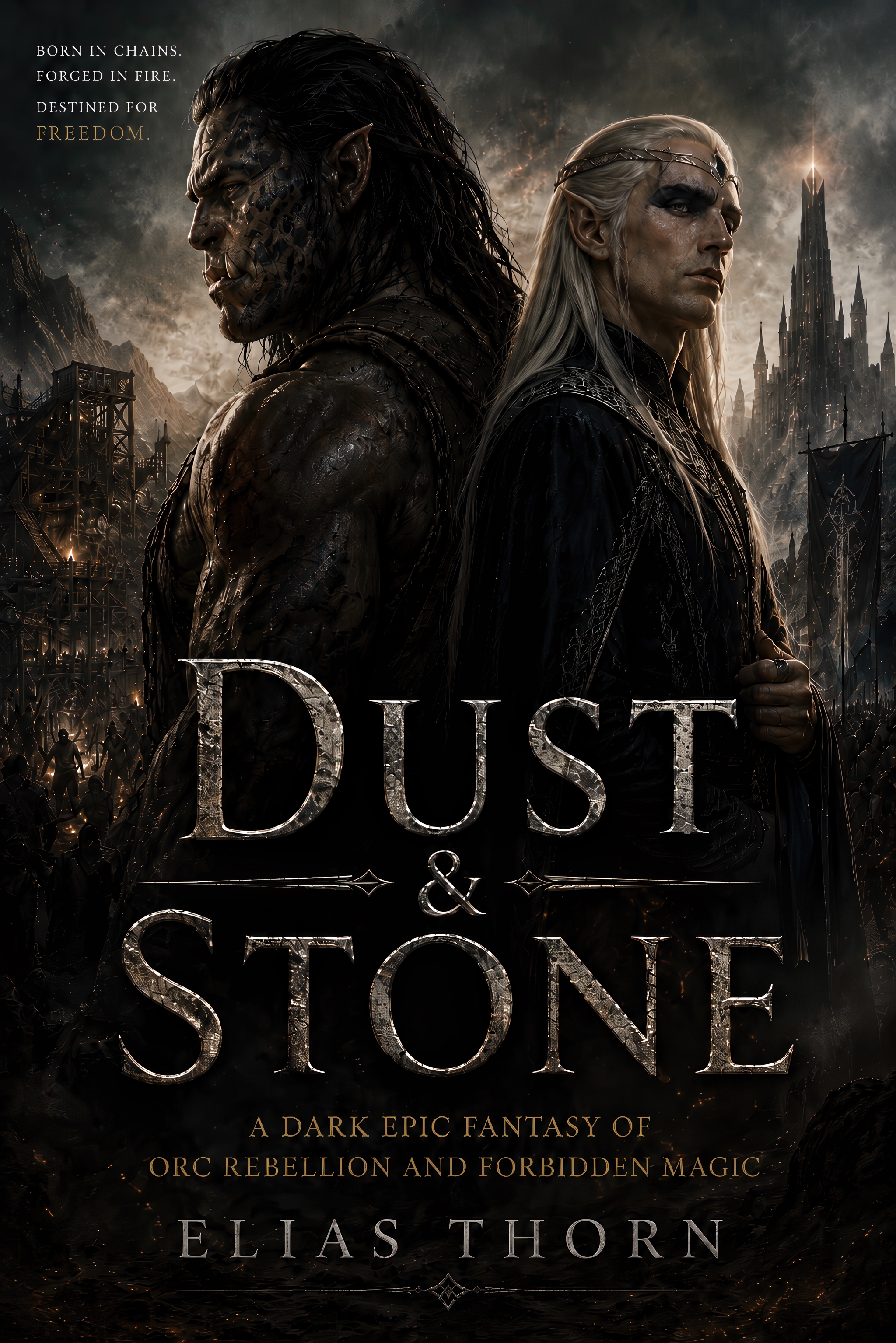
Understanding the evolution of orcs helps explain why books like Dust & Stone, The Grey Bastards, and Orcs have found such enthusiastic audiences.
The Origins of Orcs in Fantasy
The modern concept of the orc owes much of its popularity to twentieth-century fantasy literature.
Early fantasy writers often used monstrous races to create clear distinctions between heroes and villains. Orcs typically filled the role of hostile enemies, serving as dangerous obstacles for protagonists to overcome.
These early portrayals emphasized physical strength, aggression, and tribal warfare. Individual orc characters were rare, and their cultures received little attention. Readers were not expected to sympathize with them or understand their perspective.
While these depictions became foundational to fantasy, they left little room for complexity.
Orcs as the Enemy
For many years, fantasy stories relied on orcs as a convenient antagonistic force.
They appeared as invading armies, raiders, and soldiers serving dark powers. Because they were often portrayed as inherently evil, authors could use them to create conflict without spending significant time exploring motivation or culture.
This approach worked well for classic heroic fantasy, where stories frequently centered on battles between clearly defined forces of good and evil.
However, as fantasy matured, readers began asking new questions.
Why were the orcs fighting?
What did their societies look like?
Did they have families, traditions, and beliefs?
The search for answers to these questions helped drive the next stage of the genre’s evolution.
The Rise of Nuanced Orcs
As fantasy literature became more sophisticated, authors started treating orcs as something more than faceless enemies.
Instead of presenting them solely as monsters, writers began exploring their cultures, histories, and motivations. Orc societies became more diverse, with unique traditions, political structures, and belief systems.
This shift transformed orcs from simple antagonists into believable people.
Readers discovered that many of the qualities traditionally associated with orcs—strength, loyalty, resilience, and determination—could also make them compelling protagonists.
The result was a new generation of fantasy stories that challenged long-standing assumptions.
The Impact of Role-Playing Games
Role-playing games played a significant role in expanding the way audiences viewed orcs.
Games encouraged players to imagine fantasy worlds from multiple perspectives. Rather than simply fighting orcs, players could learn about their cultures, interact with them diplomatically, or even play as orc characters themselves.
This exposure helped popularize more nuanced interpretations of the race.
As gaming culture grew, so did interest in fantasy stories that portrayed orcs as more than enemies.
The influence of games can still be seen throughout modern fantasy literature.
Orcs Become Heroes
One of the most important developments in recent fantasy has been the rise of the orc protagonist.
Books such as Orcs by Stan Nicholls helped demonstrate that readers were interested in stories told from the perspective of characters who had traditionally been treated as villains.
These stories gave readers access to the thoughts, fears, hopes, and struggles of orc characters.
Suddenly, the race that had spent decades serving as an obstacle became the emotional center of the narrative.
This change opened the door for increasingly ambitious and sophisticated storytelling.
Modern Orc Fantasy
Today’s fantasy authors continue pushing the boundaries of what orc-centered stories can achieve.
Modern orc fantasy frequently explores themes such as:
- Identity
- Cultural survival
- Freedom
- Colonization
- Resistance
- Leadership
- Family
- Belonging
Rather than focusing solely on warfare, these stories often examine what it means to preserve a culture under pressure or fight for a future that seems impossible.
Readers have embraced these narratives because they offer perspectives that feel both fresh and emotionally resonant.
Dust & Stone and the Modern Orc Narrative
A strong example of this evolution can be found in Dust & Stone.
The novel follows the Kethri, a proud race of orcs who have spent fifty years enslaved beneath the mountains by the elven Dominion. Their language has been outlawed, their traditions suppressed, and their freedom stolen through the use of ancient silver magic.
Instead of portraying the orcs as villains, the story positions them as victims of conquest struggling to preserve their identity.
At the center of the narrative is Vorrick, an ordinary laborer whose personal tragedy pushes him toward rebellion. Through his journey, readers experience the emotional and cultural consequences of oppression while witnessing the difficult choices required to pursue freedom.
The novel exemplifies many of the qualities that define modern orc fantasy: rich worldbuilding, complex themes, morally challenging decisions, and a deep commitment to exploring orc culture from the inside.
👉 Learn more about Dust & Stone: https://a.co/d/0hGuId6e
Why Readers Love Modern Orc Stories
The growing popularity of orc-centered fantasy reflects changing reader expectations.
Many fantasy fans are drawn to stories that challenge traditional assumptions and explore unfamiliar perspectives. Orc protagonists provide a natural way to accomplish this because they have historically existed outside the center of fantasy narratives.
Modern orc stories often feature underdogs fighting against impossible odds, making them especially easy to root for. They also allow authors to tackle serious themes while maintaining the excitement and wonder that readers expect from fantasy.
This combination of emotional depth and epic storytelling has helped transform orc fantasy into one of the genre’s fastest-growing subgenres.
The Future of Orc Fantasy
The evolution of orcs is far from complete.
As fantasy continues to diversify, readers can expect to see even more creative interpretations of the race. Future stories may focus on diplomacy, exploration, family dynamics, politics, religion, or entirely new aspects of orc culture that have yet to be explored.
What seems certain is that orcs will continue moving beyond the narrow stereotypes that once defined them.
The race has become too rich, too flexible, and too beloved by readers to return to its earlier role as a simple fantasy monster.
Final Thoughts
The journey of the orc from villain to hero represents one of the most fascinating developments in fantasy literature. What began as a straightforward enemy archetype has evolved into a diverse collection of characters and cultures capable of supporting some of the genre’s most compelling stories.
Modern fantasy has demonstrated that orcs can be warriors, leaders, scholars, revolutionaries, and heroes. Their stories explore themes that resonate deeply with readers while offering fresh perspectives on familiar fantasy concepts.
For anyone interested in seeing how far the genre has come, Dust & Stone provides an excellent example of modern orc fantasy at its best. Through the story of Vorrick and the Kethri, the novel showcases the emotional depth, cultural richness, and narrative potential that define today’s most memorable orc-centered stories.
👉 Get your copy of Dust & Stone: https://a.co/d/0hGuId6e
Frequently Asked Questions
How have orcs changed in fantasy literature?
Orcs have evolved from simple villainous monsters into complex characters with rich cultures, histories, and motivations.
What was the traditional role of orcs in fantasy?
Traditionally, orcs served as enemies and antagonists who opposed the heroes of fantasy stories.
Are there fantasy books where orcs are the heroes?
Yes. Modern fantasy increasingly features orcs as protagonists, including books like Dust & Stone, Orcs, and The Grey Bastards.
Why are modern readers interested in orc protagonists?
Readers enjoy stories that offer fresh perspectives, complex themes, and characters who challenge traditional fantasy stereotypes.
Is Dust & Stone an example of modern orc fantasy?
Absolutely. The novel focuses on an enslaved orc civilization fighting to reclaim its identity and freedom, making it a strong example of contemporary orc-centered fantasy.
Leave a Reply